

Career numbers side by side
Hitters
| Player | Years | G | H | HR | RBI | SB | AVG | OPS |
|---|---|---|---|---|---|---|---|---|
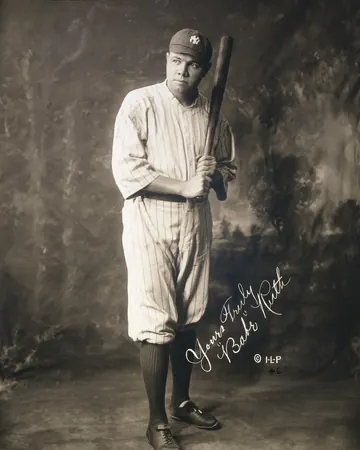 Babe Ruth Babe Ruth | 1914-1935 | 2,504 | 2,873 | 714 | 2,213 | 123 | .342 | 1.164 |
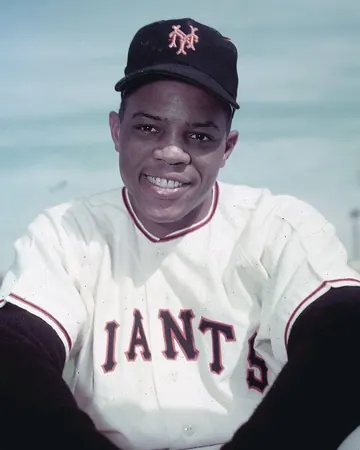 Willie Mays Willie Mays | 1951-1973 | 3,005 | 3,293 | 660 | 1,909 | 339 | .301 | .941 |
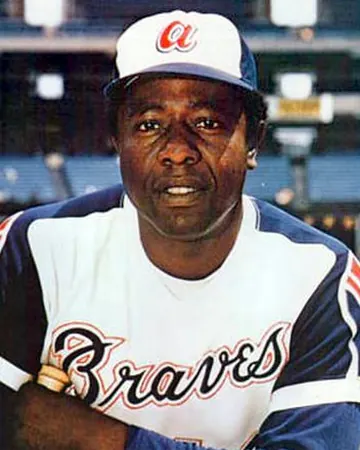 Hank Aaron Hank Aaron | 1954-1976 | 3,298 | 3,771 | 755 | 2,297 | 240 | .305 | .929 |
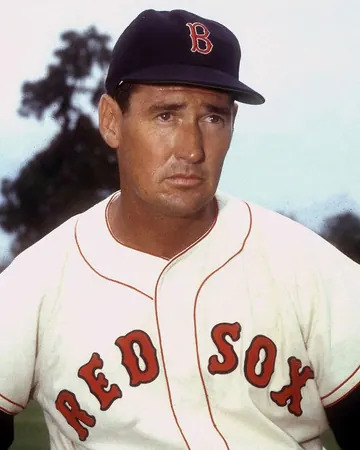 Ted Williams Ted Williams | 1939-1960 | 2,292 | 2,654 | 521 | 1,839 | 24 | .344 | 1.116 |
 Barry Bonds Barry Bonds | 1986-2007 | 2,986 | 2,935 | 762 | 1,996 | 514 | .298 | 1.051 |
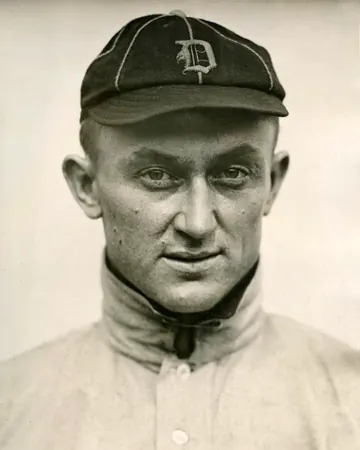 Ty Cobb Ty Cobb | 1905-1928 | 3,035 | 4,191 | 117 | 1,938 | 892 | .367 | .946 |
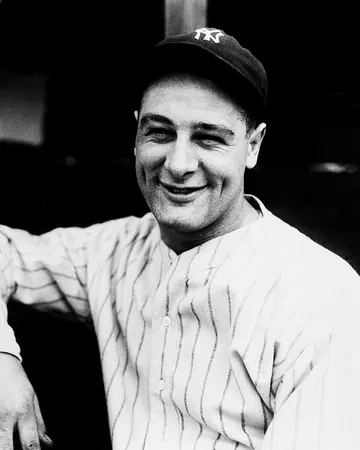 Lou Gehrig Lou Gehrig | 1923-1939 | 2,164 | 2,721 | 493 | 1,995 | 102 | .340 | 1.079 |
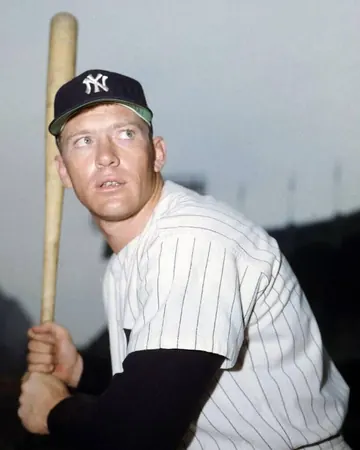 Mickey Mantle Mickey Mantle | 1951-1968 | 2,401 | 2,415 | 536 | 1,509 | 153 | .298 | .978 |
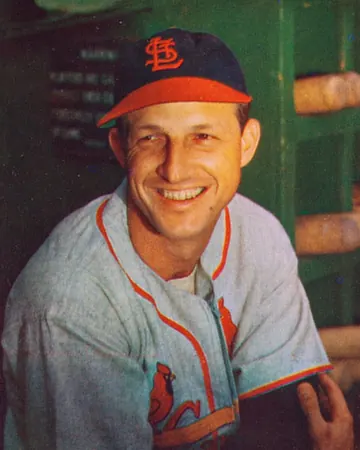 Stan Musial Stan Musial | 1941-1963 | 3,026 | 3,630 | 475 | 1,951 | 78 | .331 | .976 |
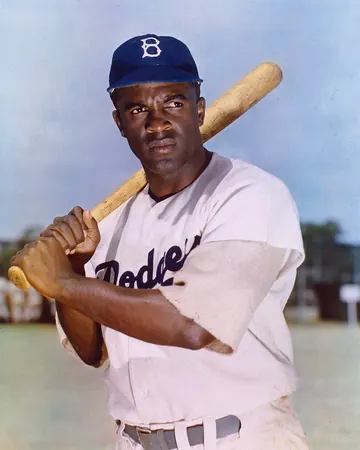 Jackie Robinson Jackie Robinson | 1947-1956 | 1,419 | 1,568 | 141 | 765 | 203 | .313 | .887 |
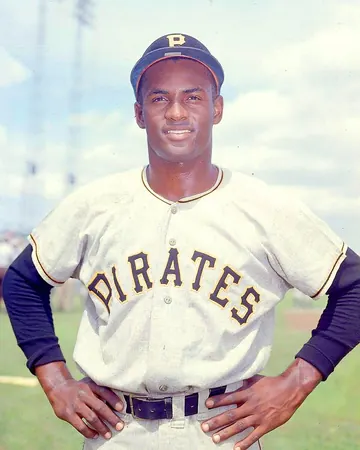 Roberto Clemente Roberto Clemente | 1955-1972 | 2,433 | 3,000 | 240 | 1,305 | 83 | .317 | .834 |
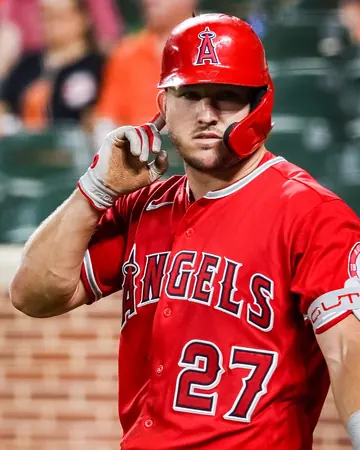 Mike Trout Mike Trout | 2011-active | 1,790 | 1,878 | 426 | 1,072 | 225 | .290 | .963 |
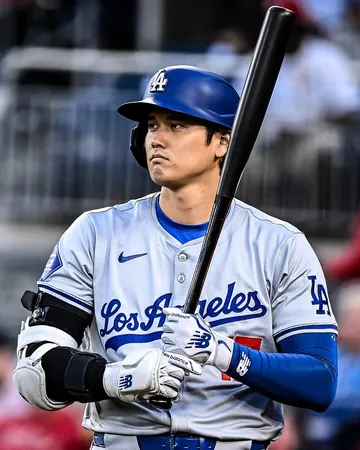 Shohei Ohtani Shohei Ohtani | 2018-active | 1,172 | 1,194 | 310 | 750 | 176 | .281 | .949 |
Pitchers
| Pitcher | Years | G | W-L | ERA | K | IP | WHIP |
|---|---|---|---|---|---|---|---|
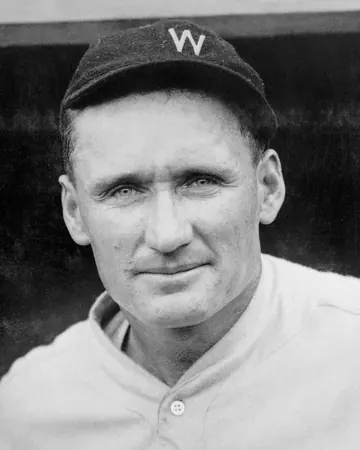 Walter Johnson Walter Johnson | 1907-1927 | 802 | 417-279 | 2.17 | 3,508 | 5914.1 | 1.06 |
 Cy Young Cy Young | 1890-1911 | 906 | 511-316 | 2.63 | 2,803 | 7356.0 | 1.13 |
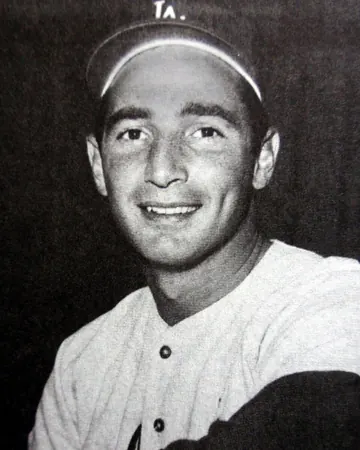 Sandy Koufax Sandy Koufax | 1955-1966 | 397 | 165-87 | 2.76 | 2,396 | 2324.1 | 1.11 |
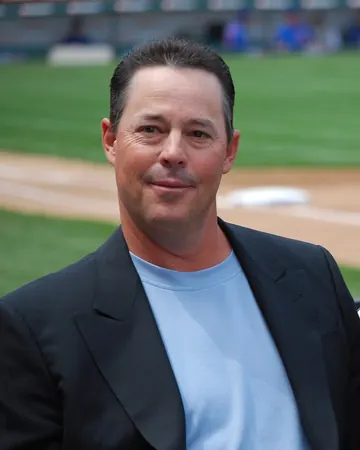 Greg Maddux Greg Maddux | 1986-2008 | 744 | 355-227 | 3.16 | 3,371 | 5008.1 | 1.14 |
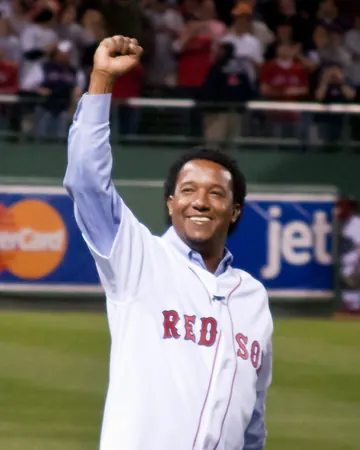 Pedro Martínez Pedro Martínez | 1992-2009 | 476 | 219-100 | 2.93 | 3,154 | 2827.1 | 1.05 |
Click a header to sort. Career regular-season totals from the MLB Stats API. Shohei Ohtani's line is his hitting record. Photos via Wikimedia Commons, credited on the player cards above.
Any list of the best baseball players of all time starts an argument, and that is half the fun. What follows is not a definitive ranking. It is a shortlist of players whose case holds up under the numbers and under the eye test, in no strict order, with a short and factual note on each. We have leaned on era-adjusted stats where they help and left out anything that is still changing mid-season, so the two active players are described as of the end of the 2025 season.
How we compare players from different eras
Raw totals mislead. A .300 average meant something different in 1930, when the whole National League hit above .300, than it did in 1968, when pitching ruled. Ballparks matter too: a fly ball that clears the fence in one park is an easy out in another.
Two tools help. OPS+ takes a hitter’s on-base plus slugging and adjusts it for the league and his home park, with 100 as league average; a 150 means 50 percent better than average. ERA+ does the same for pitchers. WAR, or wins above replacement, rolls hitting, fielding, baserunning and pitching into one estimate of how many wins a player added compared with a readily available substitute. None of these is perfect, and different sites calculate WAR slightly differently, but they let you put Walter Johnson and Greg Maddux on the same scale. Peak matters as well as career: a player with seven brilliant seasons can rank above one with twenty good ones.

The hitters and all-around players
Babe Ruth

Ruth is the default answer for good reason. Before he became a full-time outfielder, he was a star left-handed pitcher for the Red Sox, finishing his career at 94-46 with a 2.19 ERA. Then he changed how the game was played. His 60 home runs in 1927 were more than most teams hit, and he retired with 714 home runs and a .342 average. No one else in the conversation was elite on both sides of the ball for years at a time, at least until very recently.
Willie Mays

Mays is the complete package: power, speed, average and the best center field defense of his time. He hit 660 home runs and won 12 Gold Gloves, and his over-the-shoulder grab of Vic Wertz’s drive in Game 1 of the 1954 World Series is still simply called “The Catch.” He missed most of two seasons to military service early in his career, which makes his totals even more impressive. Mays died in June 2024.
Hank Aaron

Aaron never hit 50 home runs in a season, and that is the point. He was relentlessly good for more than two decades, and on April 8, 1974, he passed Babe Ruth’s record while receiving hate mail and death threats. He finished with 755 home runs and 2,297 runs batted in, still the career RBI record.
Ted Williams

Williams may be the purest hitter who ever lived. He hit .406 in 1941, and nobody has finished a season at .400 since. His career line of .344 with 521 home runs came despite missing nearly five seasons to service as a Marine pilot in World War II and Korea. Add those years back and his totals would look very different.
Barry Bonds

On numbers alone, Bonds has the strongest case of anyone since Ruth. He holds the career home run record at 762 and the single-season record at 73, set in 2001, and he won seven MVP awards; no one else has more than four. He was also named in the BALCO investigation into performance-enhancing drugs, and he was not elected to the Hall of Fame in ten years on the writers’ ballot or on the Contemporary Era ballot in December 2025. Some fans set his late-career numbers aside, others point out that he was already a Hall of Fame player before the late 1990s. We list him and leave that judgment to you.
Ty Cobb

Cobb’s career batting average of .366 is the highest in history, and his 4,189 hits by the official count stood as the record until 1985. When the Hall of Fame held its first election in 1936, Cobb received more votes than anyone, 222 of 226. His reputation off the field has been debated by biographers ever since, but his dominance as a hitter is not in question.
Lou Gehrig

Gehrig played 2,130 consecutive games, a streak that ended on May 2, 1939, when he took himself out of the lineup. He was diagnosed with ALS that June, and on July 4, 1939, he told a Yankee Stadium crowd that he considered himself “the luckiest man on the face of the earth.” At the plate he was one of the most productive first basemen ever, often overshadowed only by the teammate batting in front of him, Babe Ruth.
Mickey Mantle

At his peak Mantle might have been the most gifted player on this list. In 1956 he won the Triple Crown with a .353 average, 52 home runs and 130 RBIs. He finished with 536 home runs and hit a record 18 in the World Series. Knee injuries from early in his career limited what he could do later, which is part of why fans still argue over how good he could have been.
Stan Musial

Musial was a model of consistency. He won National League MVP awards in 1943, 1946 and 1948 and retired with 3,630 hits, split exactly in half: 1,815 at home and 1,815 on the road. That quirk says a lot about him. He hit everywhere, against everyone, for more than two decades.
Jackie Robinson

Robinson belongs here for his impact as much as his numbers. His debut for the Brooklyn Dodgers on April 15, 1947, ended the color line in the major leagues. He won the first Rookie of the Year award that season and the NL MVP in 1949, and in 1997 MLB retired his number 42 for every club. He played only ten seasons in the majors, having started at 28, which is exactly why raw totals miss his value.
Roberto Clemente

Clemente combined a powerful throwing arm in right field, good for 12 Gold Gloves, with a .317 career average and 3,000 hits. The last of them, a double on September 30, 1972, was his final regular-season hit. On December 31, 1972, he died in a plane crash while taking relief supplies to earthquake victims in Nicaragua. The Hall of Fame waived its five-year waiting period and inducted him in 1973.
Mike Trout

Trout has been the standard for all-around excellence of his generation, winning American League MVP awards in 2014, 2016 and 2019. Through the 2025 season his career era-adjusted numbers put him with the best center fielders ever, though injuries have cost him large parts of several recent seasons. His final place on lists like this one will depend on how his remaining years go.
Shohei Ohtani

As of the end of the 2025 season, Ohtani had won four MVP awards, all unanimous: in the American League in 2021 and 2023 and in the National League in 2024 and 2025. In 2024 he became the first player with 50 home runs and 50 stolen bases in a season, finishing with 54 and 59. What sets him apart is that he has done it as a hitter and a starting pitcher, something no one had done at this level since Babe Ruth.
The pitchers
Walter Johnson

Johnson pitched 21 seasons for the Washington Senators, mostly for losing teams, and still won 417 games, second only to Cy Young. His 110 shutouts are the major league record. His fastball was considered the hardest of his era by the hitters who faced it.
Cy Young

The award for the best pitcher in each league carries his name, and his records explain why. Young won 511 games, threw 749 complete games and pitched 7,356 innings, all major league records. They come from an era when starters were expected to finish what they began and bullpens barely existed, which is exactly why none of them is likely to be broken.
Sandy Koufax

Koufax’s peak was short and overwhelming. He threw four no-hitters, including a perfect game in 1965, and won the Cy Young Award in 1963, 1965 and 1966, each time unanimously. Then, with chronic pain in his elbow, he retired at 30. In 1972 he became the youngest player ever elected to the Hall of Fame, at 36.
Greg Maddux

Maddux won with location and movement instead of velocity. He took four straight Cy Young Awards from 1992 to 1995, won 355 games and collected 18 Gold Gloves, the most of any player. In a period of high offense, he made hitters look as if they knew what was coming and still could not do anything with it.
Pedro Martinez

At his best, Martinez may have been the most dominant pitcher ever, measured against his league. In 1999 he went 23-4 with a 2.07 ERA and 313 strikeouts. In 2000 his ERA was 1.74 when the league around him was scoring runs at one of the highest rates in history, making his ERA+ nearly three times the league average. He won three Cy Young Awards, one in Montreal and two in Boston.
How star players move lines and props today
A single hitter rarely swings a moneyline much, but a starting pitcher can. When an ace is listed, the price on his team moves, and a late scratch can move it back. That is why we track the day’s starters on our MLB probable pitchers board and why the baseball betting lines guide explains how moneylines and run lines react to pitching.
Star hitters matter most in player props. Books set their home run and total bases lines higher for them, and the public tends to bet the famous name at a shorter price than the matchup deserves. Our prop bets guide covers how to read those lines, and the NRFI page shows how the top of a strong lineup shapes first-inning scoring. Season-long awards markets, like MVP or Cy Young, sit under futures. If you want to see the break-even rate on any price, the odds calculators do the math. Keep to a budget; sports betting is for adults 21 and older, and 1-800-GAMBLER is available around the clock.
Records and milestones deserve their own list. Our page on MLB records goes through the marks that still stand, and the history of baseball explains the eras these players came from. More guides are on the homepage.


